
SPOTLIGHT: Yaya Bey and her Cheers to ‘Fidelity’
SPOTLIGHT
SPOTLIGHT
☆ BY ALEAH ANTONIO ☆
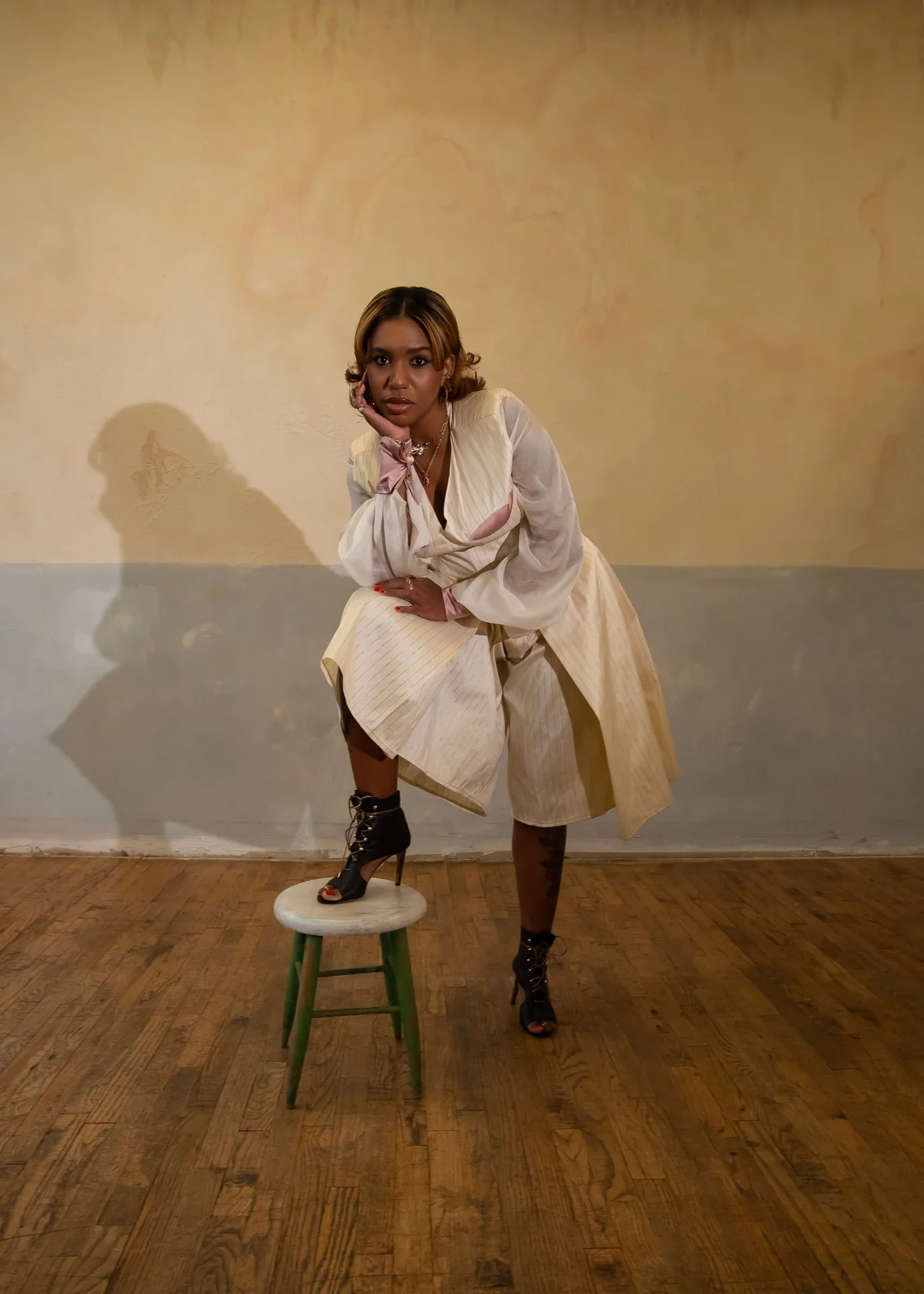
Photo by Michael Grant
“DO IT AFRAID WAS LIKE, THAT ROLLOUT WAS MISERABLE—Shit just got to a head. It was like, let’s figure out how to be okay. I think the process of trying to be okay, just life, kind of made the album.”
Hidaiyah "Yaya" Bey and I are on the phone while she drives from D.C. to New York. She’s about an hour in, and the drive sounds like it’s not unfamiliar to her. She was born to Jamaican parents in Queens, growing up there before settling into other boroughs of New York. After eventually getting priced out of Brooklyn, she left for D.C., but still talks about her hometown fondly.
“The album” we’re talking about is her latest, Fidelity, that is out today via drink sum wtr. There was a lot happening during the rollout of her previous album, do it afraid, like a full U.S. tour (she isn’t particularly fond of performing live) and press runs (she isn’t too fond of these either, which we eventually get into), and other life things that started the road to Fidelity. “Life”---she consistently cites this all-encompassing term as her main inspiration for her newest project.
“I live a life of devotion. I am really doing this, doing life, I’m committed to it. I’m committed to the people in my life and the communities I feel I’m a part of; and music, the practice of it, practice of making a body of work. It’s why I have so many albums. [I’m] trying to express myself as authentically as possible, which requires me to know myself deeper and trust myself,” Bey says.
Bey took a hard look inward to come forth with Fidelity. Her thoughts are cuttingly honest and fully formed, so much so she has an essay and short film of the same title, “Cheers to our Fidelity,” to accompany the album. The latter is on display now at the Hannah Traore Gallery in New York’s Lower East Side. Fidelity is framed around what Bey calls the “Three Deaths:” personal death, communal death and loss of innocence.
“I’ve just been thinking about, ‘What am I grieving?’ Because I am grieving, everyone’s grieving. It’s me touching on things that I am grieving—community, you know, I’m from New York, a city that’s gentrified. I’m a millennial, you know, so there’s a world that I thought I was going to inherit once I came into adulthood and that was a fallacy,” Bey says.
“Grief” is probably the most used word when it comes to Yaya Bey and her interviews. Not by her, and not willingly. She’s been making music since 2016, and released three albums before her breakthrough, Remember Your North Star, came out in 2022. Songs like “meet me in brooklyn” and “big daddy ya” garnered significant attention. Everyone wanted an interview. Then her dad passed away that same year, and ever since, every record that came after was painted with grief. People couldn’t forget about this death, Bey’s breakups, divorces, injuries… Everything was a sad thing.
“Like, that’s life. That’s what I’m making music about. It’s the nuances of my life, and it’s reductive with it to just be like, ‘Oh, you’re sad.’ You know?” she tells me.
If Bey could simply make music in the studio and release it to the world, she would. However, as an artist in America, she has to do the dance of promoting and marketing her music. It doesn’t sound too troubling for someone who wants themselves to be heard, but it can be troubling when someone misinterprets who she is.
“I put [Remember Your North Star] out and I was part of a relaunching of Big Dada under the guise of, this is going to be the label for Black and brown people, and run by people of color. People were in the house during 2020 and ‘we care about Black Lives Matter right now’ and record labels are posting black squares on their fucking Instagram feed—I was a part of that whole rollout.
“When I made Remember Your North Star, I was going through a breakup, so that was a really big breakup album. And people were like, yeah, when we write about you, it’s like Black struggle. Everything that you’re going through, all of your struggles are now racialized. I think people got caught up in that and that was the most interesting way to talk about me,” she says.
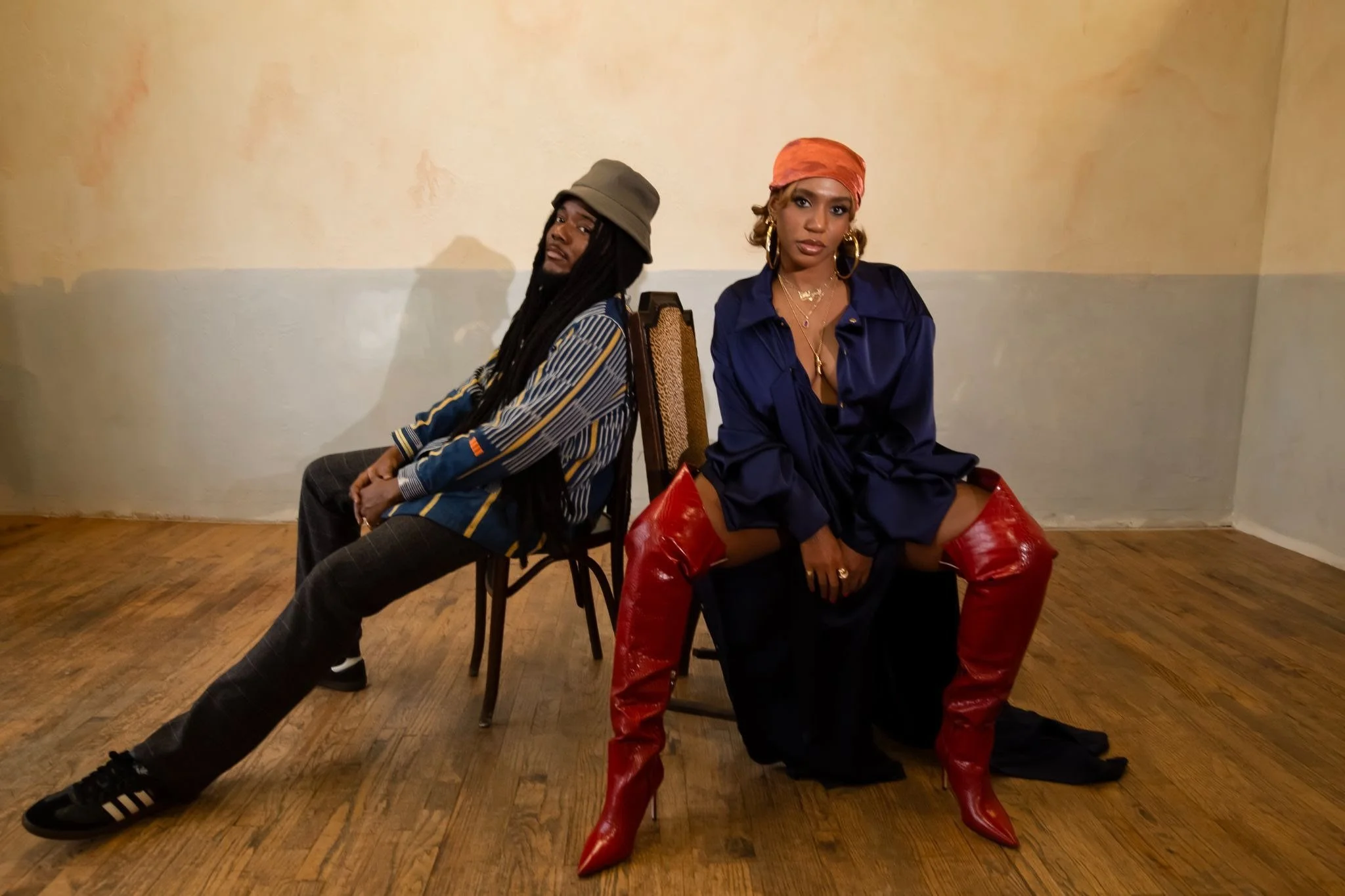
Photo by Michael Grant
Bey is intuitive, introspective, intelligent, but did everything she made have to be perceived so one-dimensionally? On Fidelity, she shows just how much more there is to her, how much more there is to life. This range is mirrored sonically—the record is full of vibrancy and sensuality; as much lightheartedness as there is richness. Lead single “Blue” has a beautiful lightness against its bass and sunny flutes. Its follow-up, “Egyptian Musk (feat. NESTA)” incorporates reggae in its R&B groove, as Bey sings “The world is so cold, but baby it’s warm in here.”
There are songs that nod and react to ones from her previous record, do it afraid. “The Towns (bella noche pt. 2)” succeeds “bella noches pt. 1” while “Dream Girl (Lexapro Remix)” defies the original “dream girl.”
“The first “dream girl” is this whole “I could be a fantasy” [thing], and “Dream Girl (Lexapro Remix)” is actually like, I don’t owe it to anybody to be a fucking fantasy. Like please get the fuck out of my face, actually,” she says.
She references a viral clip of two women getting interviewed after New Orleans night club Bella Noche’s gets shot up—”If you can’t go to Bella Noche’s, where the hell are you supposed to go?” She uses this as her analogy to a gentrified New York. When your hometown is pricing out you and your own people, where are they supposed to turn?
Much of the record nods to Bey’s love of dance music, disco and reggae. After working with an array of producers in the past, Fidelity has Bey’s signature clear as day.
“I learned that I like it better when the idea starts with me. Even when I’m working with other people, when the idea starts with me, it sounds more like me. I think Fidelity is probably the album that sounds most like me. It’s the closest I’ve gotten to how I want to sound,” Bey says.
To celebrate the album release, Bey will be in New York for the showings of her short film. There will be DJ sets, artist talks and more, all in her hometown. When I ask her to describe her short film, she says that it’s about “how Black people are experts at joy.”
“Obviously, Black people have shit that happens to us because we are Black, right? Clearly, yeah, great. But the world is on fire for everyone, and assigning the trauma expertise to Black people is flattening,” Bey says. “We make the internet funny. We made house music, reggae, techno, everything people like to dance to. Clearly, we are so fucking good at joy, too. It’s about that. It’s about allowing people to be the fullness of who they are.”
