
Q&A: Inside the Lived-In World of Bones Forever
INTERVIEW
INTERVIEW
☆ BY SHEVON GREENE ☆
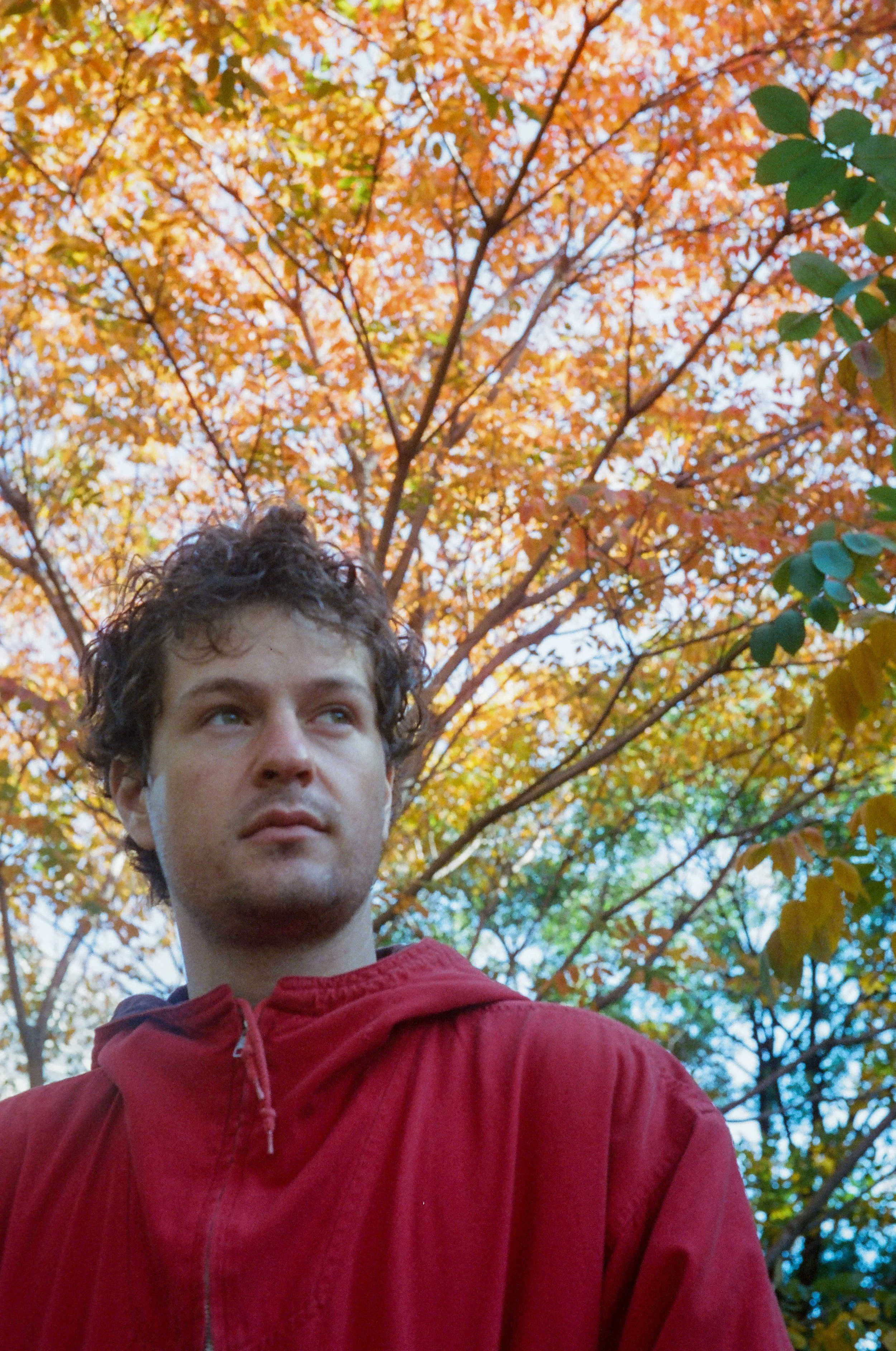
SOME SONGS ARE WRITTEN QUICKLY AND RELEASED JUST AS FAST—others are lived in, turned over and slowly reshaped until they’re honest in a new and refreshed way. For Brooklyn-based artist Ben Weinman, Bones Forever has been the latter.
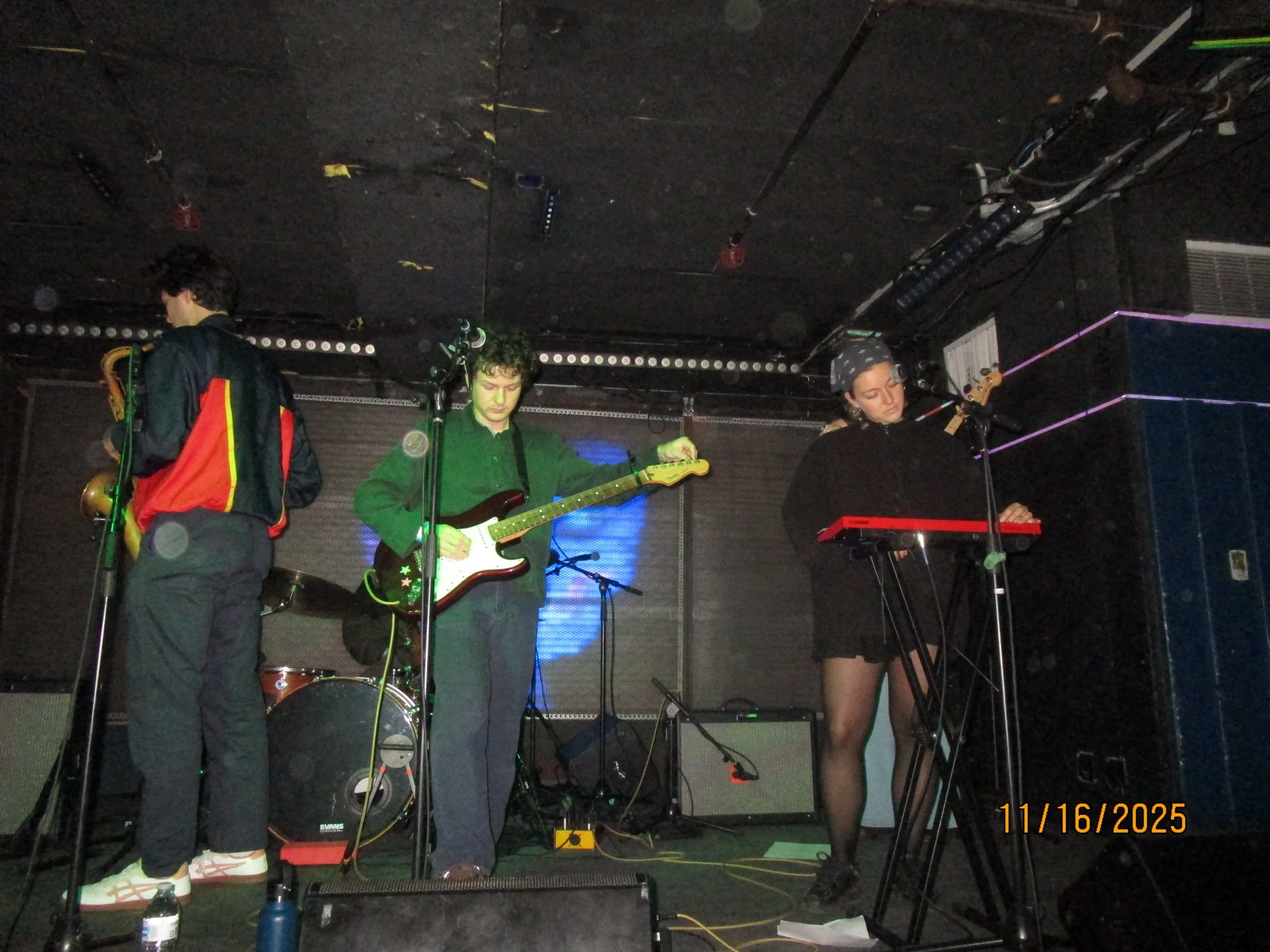
The project’s self-titled debut, years in the making, is a reflection on five years of revisiting voice memos, reimagining arrangements and letting collaboration take the driver’s seat to reshape songs that first began in solitude. Supported by a seven-piece band made up of family and longtime friends (including his sister Charlotte Weinman, aka Horsepower), Bones Forever is the perfect example of community coming together to create something that mirrors its message: that we are all a little bit of everyone who shapes us.
Debut single “Socks at the End of the World” (out today) introduces a world of rich woodwinds, off-kilter meter and a chorus that swells open with a quiet optimism. Co-produced with his brother Noah Weinman, the track balances whimsy and melodrama while tracing heartbreak not as an ending, but as something that shifts and lingers inside of yourself. It’s a reflective track, wallowing and buoyant without denying loss.
We sat down with Weinman to talk about living with songs for five years, building music with family and why love never really leaves, but just changes shape. Keep reading to step inside the world of Bones Forever.
LUNA: You’ve said you’ve been living with the songs on your upcoming self-titled debut album for five years, kind of flipping them inside out. What does that process look like for you? How do you know when a song has revealed itself or is ready?
WEINMAN: It’s a great question, and I don’t think you ever totally know. I was just looking through my voice memos before this interview to remind myself where they started five years ago. They’re just little clippings and bits of things, and some of them are in quite different places now. A lot of projects I’ve worked on have been faster turnarounds; you write it and get it out. I wanted to sit with these longer and let them reveal deeper grooves, unintentional pun included [laughs]. I kept reimagining them, deciding what felt more true to how I currently felt about the song. Bringing them to a band definitely changes things. I didn’t know the first group I started playing with would be the one I continued with, but they are, and they’ve been integral in shaping how the songs exist now. I love that process of seeing how far you can stretch the same material. But at some point, it needed to get down on the page. My brother is very good at expediting things like that. I could’ve kept fiddling with them, but we got a nice weekend in and laid them down. I’m happy with the capsule they exist in now.
LUNA: It’s cool you can look back at those original voice memos and see how they’ve transformed. Collaboration seems really close to your writing. Do songs start personal and then expand outward, or are they communal from the beginning?
WEINMAN: These definitely started in solitude. I didn’t know what capacity they’d be performed in, solo or with a larger group. I’m really glad I brought them to a group, though. We have a wide range of instrumentation, which adds texture and potential sounds. But this collection started with just me. Bringing them to the group and hearing ideas and changes was helpful. Five years is a long time to sit with something as small as a song, so fresh ears propelled them into their next life.
LUNA: That’s so nice that you have songs that are personal but can still bring them to people you trust. What does having a seven-piece band of family and friends change about the emotional stakes? Does it make things more vulnerable or more freeing?
WEINMAN: There’s definitely vulnerability. [My sister] Charlotte [aka Horsepower] is in the group, so getting to play together is really nice. It’s a mix of very old friends, more recent friends and people I’ve reconnected with. Bringing everyone together has been special. There’s vulnerability in playing songs for someone you haven’t seen in years and realizing, “This is where I’m at.” But it’s also validating when people respond positively and want to build on the ideas. You have to be vulnerable, but there’s also the warm embrace of your friends.
LUNA: It reminds me of inviting people from different eras of your life to the same gathering and seeing them connect.
WEINMAN: Exactly, like your best friend from kindergarten talking to your college roommate.
LUNA: You co-produced this with your brother Noah. How does working with family differ from other collaborators?
WEINMAN: There’s definitely some hive mind. We grew up on the same music, in the same space, listening to the same bands. It makes sense we’d have similar responses. That makes working together awesome because we’re pulling from the same reference bank. We understand each other’s impulses and taste.
LUNA: The instrumental direction on “Socks at the End of the World” feels so textured with the lush woodwinds and slightly off-kilter meter. How did you land on that sonic world?
WEINMAN: I traced it back to old voice memos to see where it started. The weird meter is there early on, just not as forward. I play saxophone—that’s the instrument I’ve studied—so I wanted to bring that tone into the song. I treated the sax more like a lead guitar than background texture. That approach stayed compelling throughout the record. Some songs on the record feel lush and atmospheric; others are more brash and forward.
LUNA: The chorus really lifts and opens up. Was that intentional?
WEINMAN: A lot of early versions didn’t have a chorus at all. It just snowballed into the outro. That namesake part was the first thing I wrote. The chorus uses the same chord progression, but the melody expands. It felt better to build, then build again, rather than just incline and drop. The uplifting swell owes a lot to the rhythm section digging in.
LUNA: The title alone really sticks out. Where did “Socks at the End of the World” come from?
WEINMAN: It’s literal, finding socks tucked at the end of the bed. My partner at the time used to take them off in her sleep, and you’d find this pocket of discarded socks when making the bed. “End of the bed” becoming “end of the world” was pure melodrama. It amused me [laughs]. The song dwells on how we hold onto people and things no longer present but still within us, like finding a trinket that reminds you of a moment. It felt whimsical and dramatic in a way I liked.
LUNA: You say that love doesn’t end, it shifts, and we become a little bit of everyone who touches our lives. Is that something you learned through specific relationships, or over time in general?
WEINMAN: All of the above. Romantic, platonic, any kind of love. Even when someone isn’t present, they’re still a voice guiding you. Sometimes it’s silly. Sometimes you catch yourself thinking something and realize, “That’s such a them thing.” It’s not always painful. Sometimes it’s funny.
LUNA: Do you think visually when you write?
WEINMAN: Not strongly in visuals. I pivot on sounds and single words and see where they turn. I play with scope; a single moment expanding outward. If it’s visual, it’s more associative and collaged than a static image.
LUNA: What do you hope your debut leaves behind in listeners?
WEINMAN: I avoided wallowing. It touches heartbreak themes, but it chooses buoyancy and looking at the world at large. I hope people follow the narrative through opaque imagery. There’s reaching toward joy and an optimistic future within oneself. I hope it moves people.
LUNA: What surprised you most about yourself in this process?
WEINMAN: I think I realized I’m more inclined toward acceptance than I thought. The writing feels like rolling with the punches rather than raging against everything. That surprised me.
LUNA: What does calling the album Bones Forever represent for you?
WEINMAN: The lyric [in “Socks at the End of the World”] came first. It intrigued me because it’s a little stupid in a way that amused me. You can get heady with it or just be matter-of-fact. The song being first is intentional; it sets up themes of carrying things with you. It was going to be the album name, and my roommate thought it sounded like a band name. So it became both. I’m curious to see how that ideology carries forward in future music.
